
You walk into your local coffee shop. Behind the counter is Barry, the barista. Barry has a name tag. He has a fixed schedule. He has that look of quiet desperation that only comes from being told exactly when to show up, what to wear, and how much foam is “the correct amount.”
Barry is, without question, a W-2 employee.
Then, at a corner table, there’s Brenda. She’s working on a laptop that looks like it’s survived several natural disasters. She’s surrounded by a small fortress of empty cups and wearing pajamas in public like it’s a constitutional right. She might be a graphic designer, a day trader, or a professional cat-video critic.
We don’t know. What we do know is this: Brenda is a 1099 contractor.
These two represent the great divide in the American workforce, and the IRS has a lot of feelings about which side you land on.
The catch is simple. Companies love contractors because contractors are cheaper. When you’re a W-2 employee, your employer foots the bill for half your Social Security and Medicare tax (7.65 percent), unemployment insurance, workers’ comp, and sometimes health insurance and retirement benefits. The list is long.
When you’re a 1099 contractor, the business just writes you a check. You become a neat little tax-deductible line item. The taxes, insurance, and retirement planning? All your problem now.
This is why some companies try to pass off full-blown employees as contractors. The IRS is not amused. So they created a test. Not a Scantron test. More like a forensic audit of your work life, built around one idea: control.
The IRS sorts it into three fuzzy categories:
1. Behavioral Control
If the company tells you how, when, and where to do the work, you’re on the W-2 side. Barry is told what to wear, when to clock in, and exactly how to make the latte.
Brenda is told “Logo by Friday.” How she makes it, where she makes it, and whether she uses Illustrator or a potato stamp? Not the company’s problem.
2. Financial Control
Who buys the tools? Who takes the hit when things go sideways?
Barry doesn’t buy the espresso machine or the beans. The company does. No risk, no loss.
Brenda buys her laptop, her software, her internet, and her ergonomic chair from 2007. She bears the financial risk. She can profit. She can lose money. That’s business.
3. Type of Relationship
Is this a long-term thing or a short fling?
Barry gets benefits, PTO, maybe a 401(k). He’s integrated into the business.
Brenda gets a contract. It has a start date and an end date. No benefits, no guarantees, and she can work for five other clients at the same time.
Get more articles like this straight to your inbox 
So, What’s the Big Deal?
Everything.
W-2 workers get stability. Taxes come out automatically. Employers pay half their FICA. If they’re laid off, they can file for unemployment. It’s a harness.
1099 contractors are small businesses. That $1,000 check looks great until 15.3 percent self-employment tax smacks you in the face. You have to file quarterly estimated taxes and fund your own benefits. No sick days. No safety net. But you can deduct your gear, home office, mileage, and supplies. It’s a tightrope with a great view.
1099 contractors are small businesses. That $1,000 check looks great until 15.3 percent self-employment tax smacks you in the face. You have to file quarterly estimated taxes and fund your own benefits. No sick days. No safety net. But you can deduct your gear, home office, mileage, and supplies. It’s a tightrope with a great view.
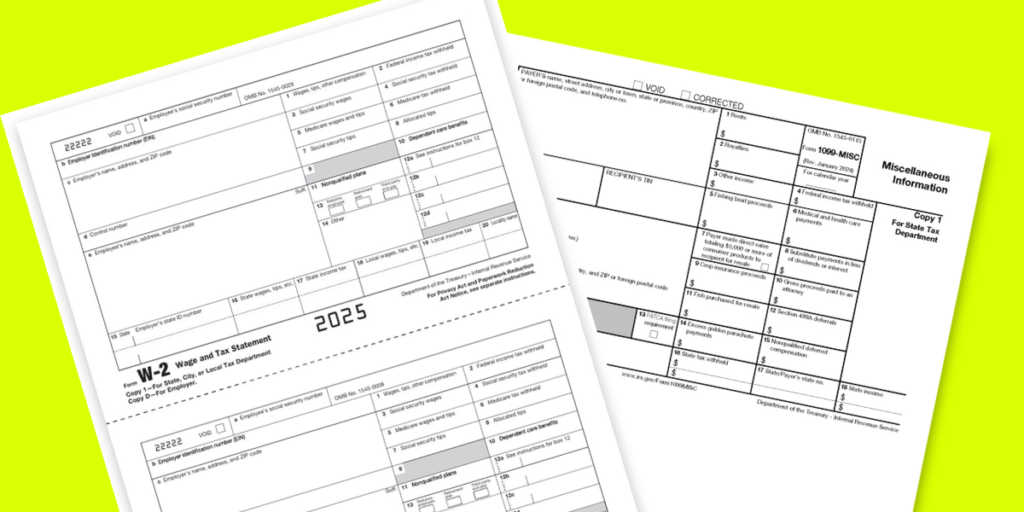
All of this income must be reported to the IRS, regardless of which form you receive. The common 1099-NEC comes directly from a business client, while the 1099-K comes from a payment processor like PayPal, Etsy, Uber, or Stripe. For 2024, the reporting threshold for the 1099-K is $5,000. Though they are different forms, the bottom line is the same: the IRS knows you got paid, and you are on the hook for the tax.
At the end of the day, your classification hinges on one single idea: control. This distinction isn’t just paperwork; it is the foundation for your taxes, benefits, financial safety net, and the very nature of your working life.